
Proprioception
Every joint becomes a sensor
The motors that move the robot also tell it what they are pushing against. Load, resistance and contact are read in real time across the whole body.

Enact builds the proprioceptive nervous system for robots, and the cortex that makes sense of it. So a machine can feel what it is doing, not only see it.
See how it worksMost robots rely on cameras. Vision finds an object, but it struggles to tell a robot how hard to grip, when something slips or what a part feels like going into place. Enact reads force inside the robot's own motors, giving it whole-body awareness of every physical interaction, without adding fragile sensors.
Force is sensed through the actuators a robot already has, much like you feel muscle tension rather than only your fingertips.
The approach is designed to work on anything from a simple robot arm to a full humanoid.
Force and touch feedback helps robots learn fine manipulation more efficiently and carry out tasks faster.
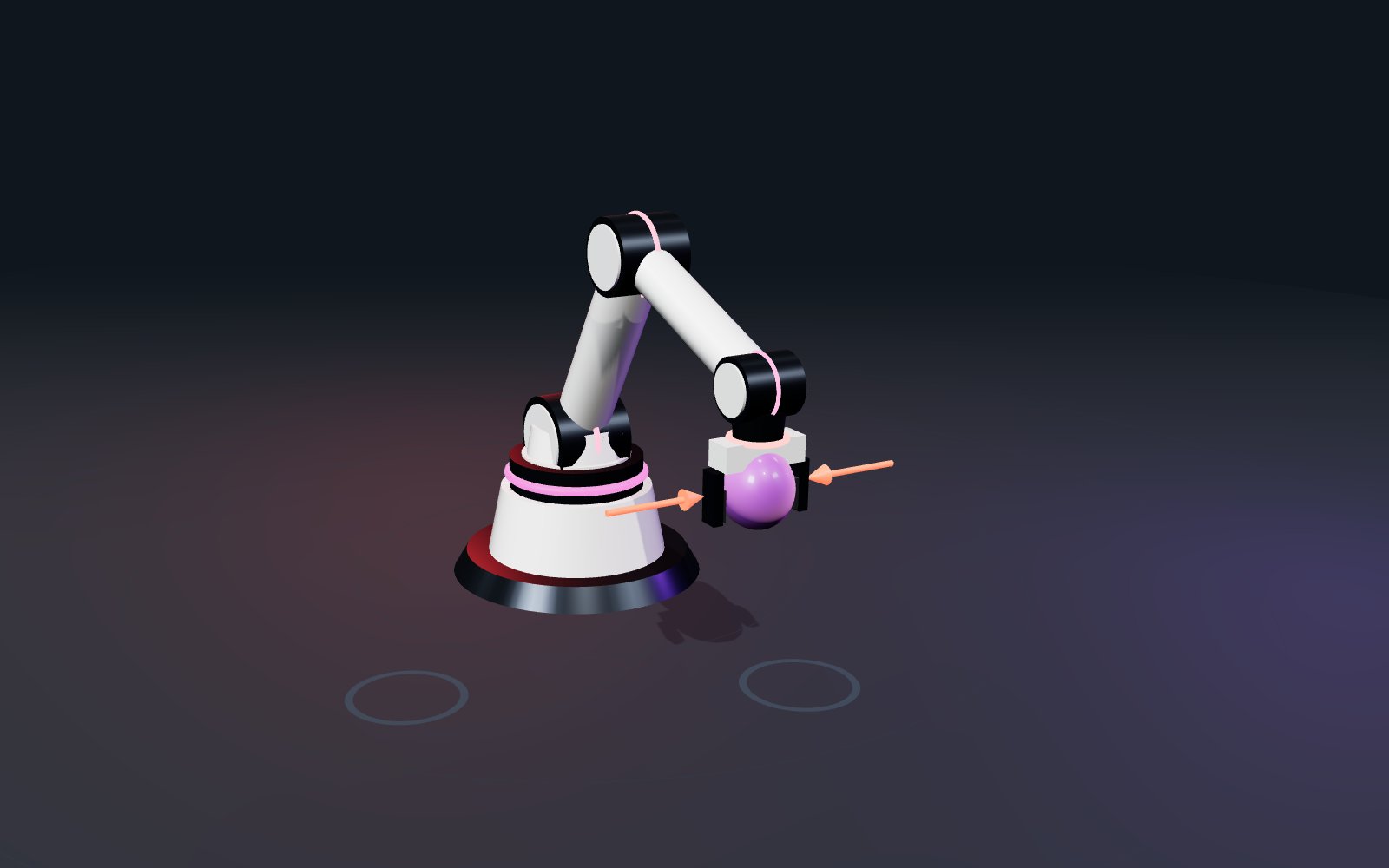
The motors that move the robot also tell it what they are pushing against. Load, resistance and contact are read in real time across the whole body.
When fingers close on an object, the robot feels the contact instead of guessing it from pixels. Soft, rigid or slipping, the response adapts.
Force data feeds the models that decide what to do next, built on top of existing foundation models and adapted to output robot actions.
Enact targets automation whose value comes from handling variation, not from repeating one high-volume motion. The goal is robots deployed across thousands of such tasks. First deployments are being discussed with large European companies in four sectors.
Assembly and handling where parts, fits and tolerances vary from one cycle to the next.
Physical work in environments that are never laid out the same way twice.
Handling a constantly changing range of products, packaging and shapes.
Delicate, irregular and soft items that vision alone cannot grip reliably.
For industrial partners who want to shape the first robots on their own tasks.
A team of twelve from 1X, Google DeepMind, Physical Intelligence, Helsing, Amazon Robotics, Helbling and ETH Zürich.
Signe Vehusheia, Yann Glauser, Noah Hüsser, Aleksander Kamiński, Jonas Eichenberger, Matt Benice, Yang Liu, Philip Kneis, Manuel Galliker, Carl Wyder and more.
Read about our approachWith angel investors Yann LeCun, Arthur Mensch (Mistral), Andrew Lonsberry (Path Robotics) and Thomas Wolf (Hugging Face).

Eleven open roles across research, controls, mechanics, infrastructure and operations. The team plans to grow fivefold by the end of 2027.
See open rolesManufacturing, infrastructure, retail or food processing tasks that need a robot with a sense of touch.
hello@enact-intelligence.comRobotics integration, controls, mechanical engineering, AI research and infrastructure, on site in Zürich.
View open rolesBackground on the company, the round and the team, plus interview requests.
Contact the team